
Wooden Pergolas vs. Gazebos: Which Fits Your Backyard Best?

The posts were set, the footprint measured, and then the question came up: pergola or gazebo? It's the way most people frame a backyard structure, open to the sky or closed under a roof. A pergola gives you defined space and filtered shade without walling anything off. A gazebo gives you a covered spot to sit when it rains. Both work, and for most yards one of them is the right answer.
They're built for different jobs, though, and which one suits a yard comes down to how the space gets used and what the weather has to be kept off. That's worth sorting out before the order goes in, because the two aren't interchangeable once they're up.
Pergolas Stay Open to Sky, Gazebos Don't
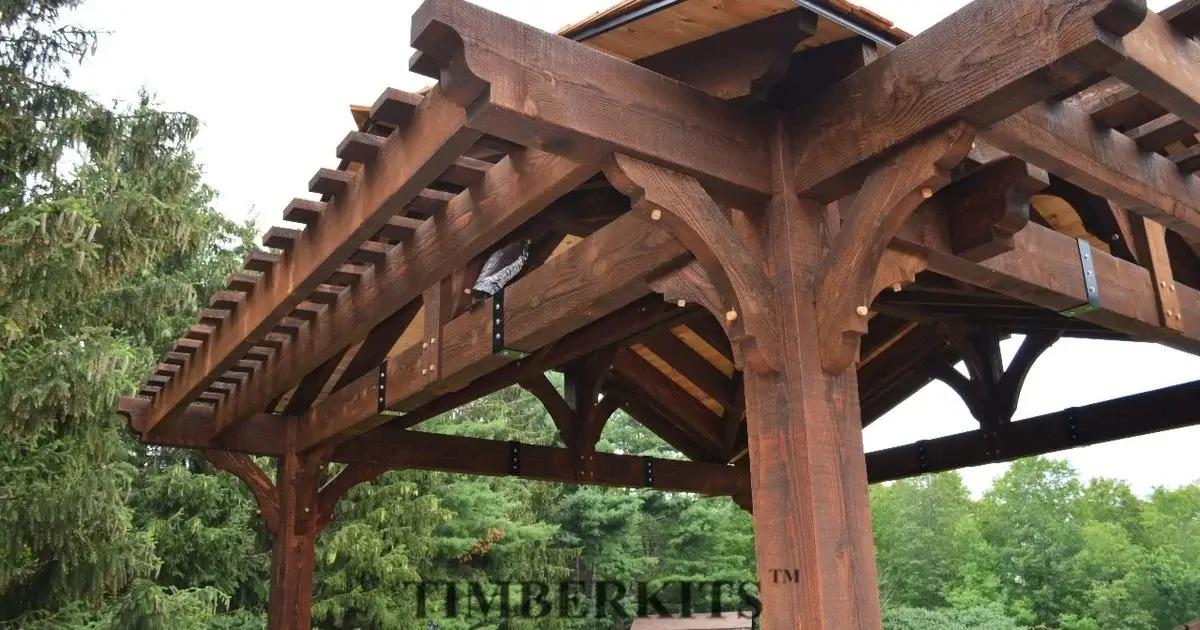
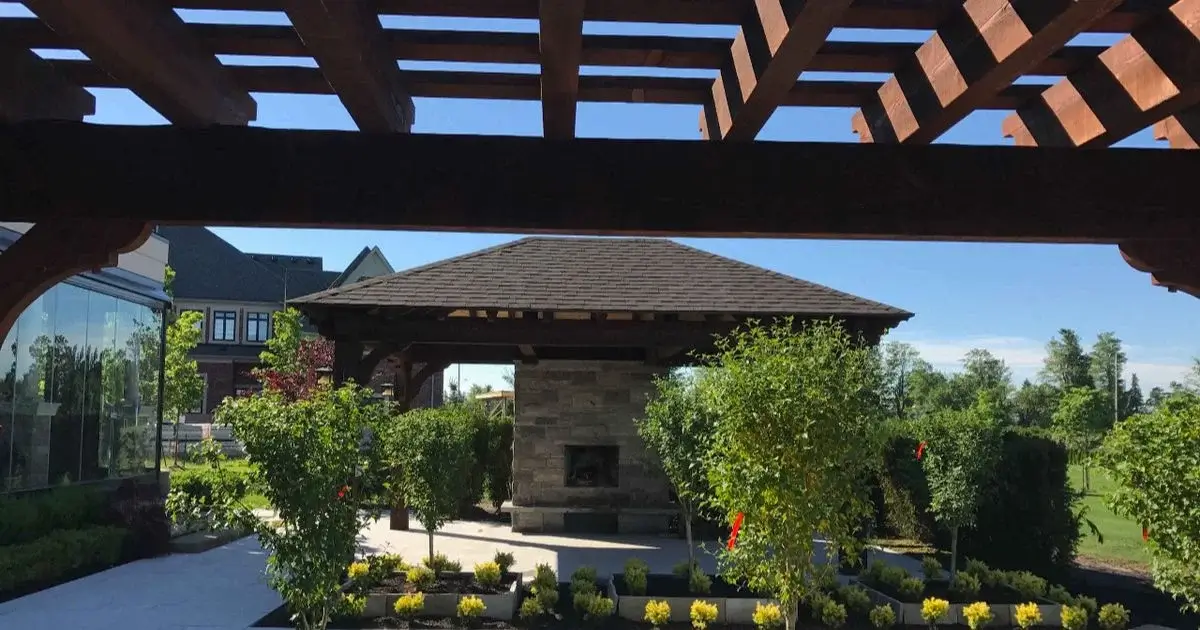
A pergola is an open-air structure with posts supporting horizontal beams and shade boards running across the top. Light filters through, some shade falls underneath, and rain still reaches the ground. The openness is the whole point. Pergolas define outdoor space without closing it off, so you're still outside, just with intentional structure around the seating area or walkway.
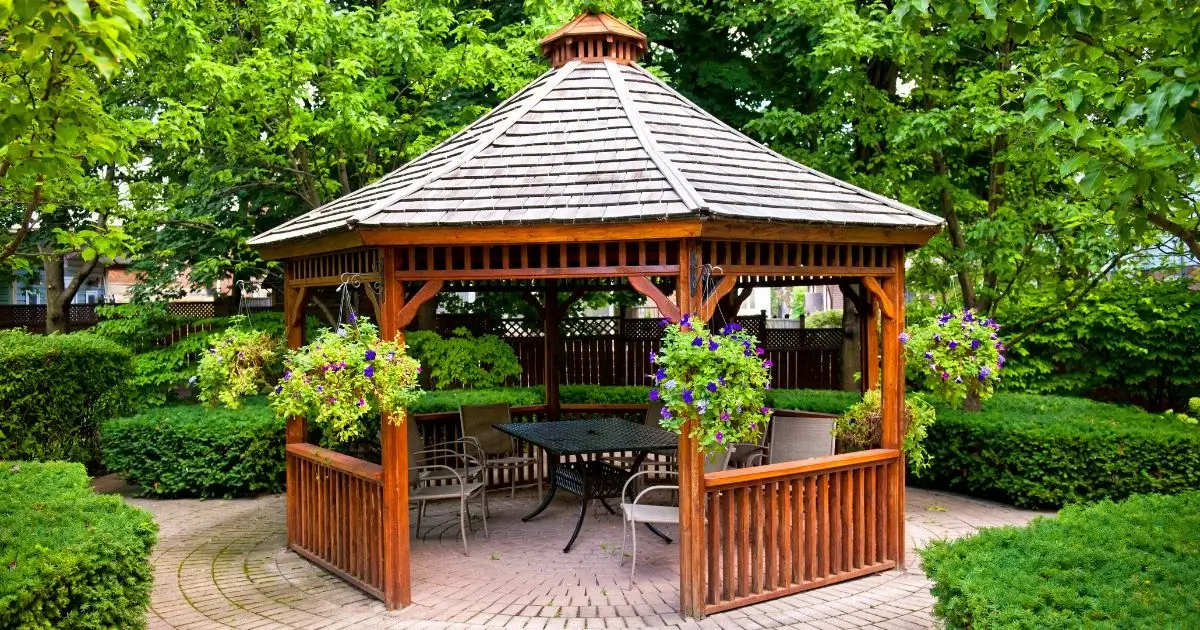
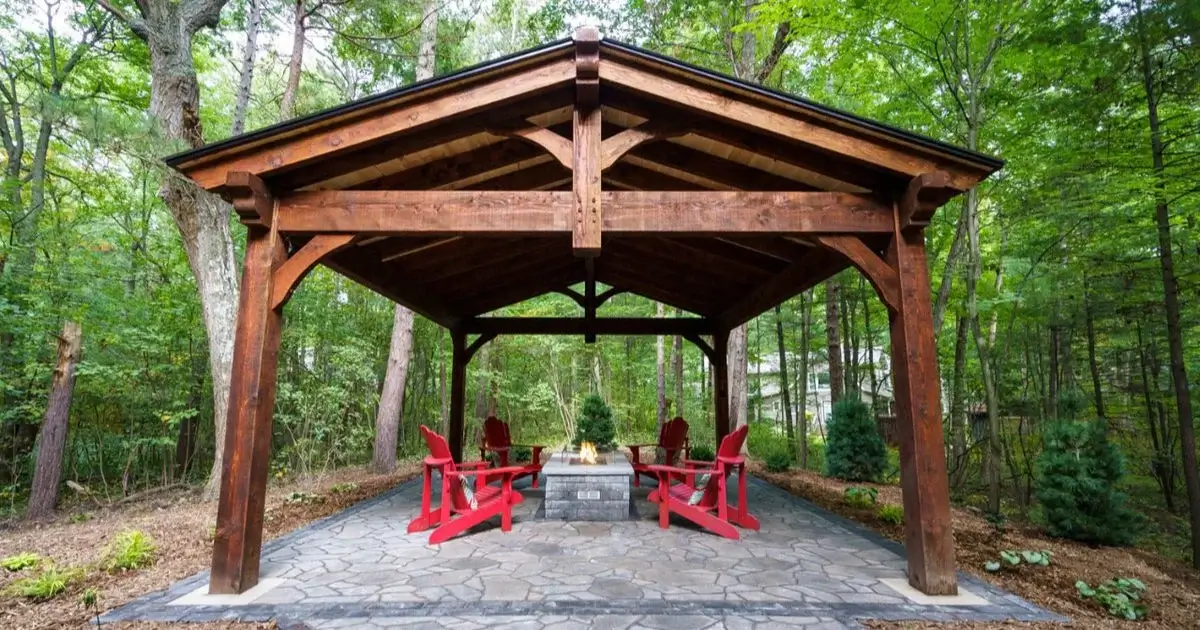
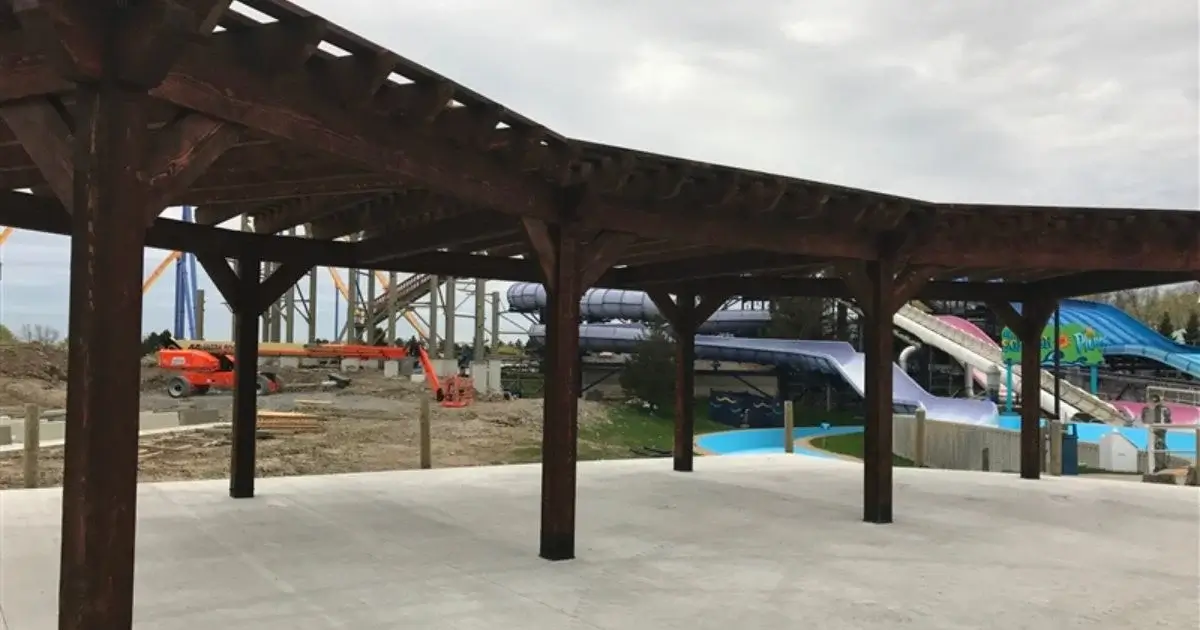
A gazebo or pavilion does the opposite. It's a freestanding covered structure with a full roof and open or screened sides, and the roof is what makes it a gazebo or pavilion. You can sit under one through a rainstorm and stay dry, which you can't do under a pergola. The sides stay open, so it shelters the space without closing it in the way a shed or a cabin would.
That single difference, roof or no roof, drives almost everything else: cost, permit requirements, how the space gets used, and which structure a given yard wants.
When a Pergola Is the Right Call
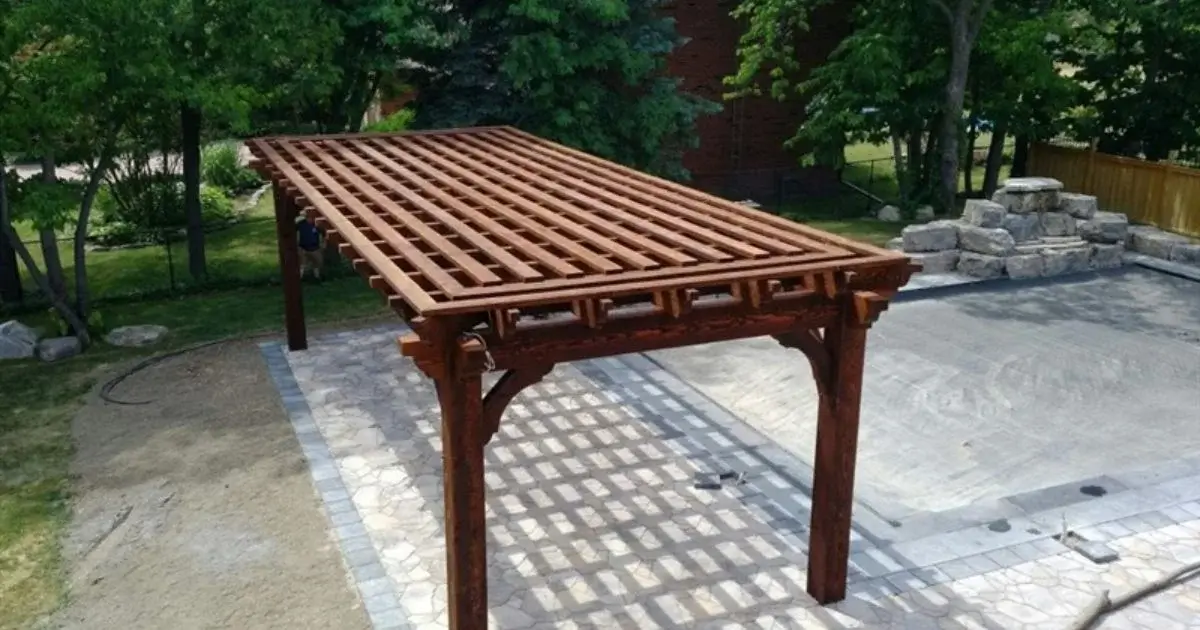
Go with a pergola when the open look is what you're after rather than a compromise you've settled for, because the highest-end yards often choose open structure over a roof for exactly that reason. A pergola frames a space while letting the sky stay part of it, which a closed structure can't do once the roof goes on.
Pergolas suit walkways, seating areas, hot tubs, and outdoor kitchens where partial shade is the goal and full coverage would feel heavy. The shade is tunable, too. Board spacing overhead sets how much sun comes through, with tighter spacing blocking more and wider spacing letting more in, and climbing plants shift the light across the season as they fill in.
The structure stays visually lighter as well. A timber pergola with mortise and tenon joinery carries a wider span between posts than a lighter build without dominating the yard, and the open overhead keeps sightlines clear in a yard where the structure shouldn't take over.
Cost is part of it too. A pergola runs less than a covered build, since there's no roof finish. For a homeowner who wants defined outdoor space and the open feel, a pergola isn't the budget option, it's the right one.
One more thing in the pergola's favour: permits. Open-air structures don't require a permit in most Ontario municipalities, which removes a step and speeds up the timeline compared to a covered build that has to clear the local building department first.
The honest limit is weather. A pergola doesn't protect furniture, so if cushions or electronics stay outside, or extending the season through Ontario's wet spring and fall matters, that's the line where a gazebo/pavilion starts making more sense.
When a Gazebo/Pavilion Is the Right Call
Choose a gazebo/pavilion when you want a covered spot that holds up when the weather turns, because this is where the roof earns its place. A pergola filters light and frames a space, but it can't keep rain off what sits underneath. A covered build can, and that's the whole reason to put one in over an open structure.
The roof in a pavilion is the real draw. Full overhead coverage keeps the space dry through a passing storm, and across the wet stretches of spring and fall that's the difference between a spot you use for part of the summer and one that works most of the year. Furniture stays out, a hot tub stays usable, and the space doesn't shut down the first time the sky opens up.
That coverage costs more than an open build, since a roof is more structure than no roof. For a yard that needs shelter rather than filtered light, the cost is what buys the extra months of use.
What a Permit Looks Like for a Gazebo/Pavilion
A gazebo's or pavilion's roof is what can pull it into permit territory, and the trigger is usually size. Many municipalities set the line for a covered accessory structure around 10 square metres, though the exact figure and how it's measured vary from one building department to the next.
A 10x10 gazebo/pavilion at 9.3 square metres usually stays under a 10 square metre line. A 12x12 at 13.4 square metres clears it. For anything in that range, confirming with the local building department before dimensions get locked saves a delay later. A pergola skips this entirely because it's open to sky.
What Happens to Timber Joints Through Ontario's Freeze-Thaw Swings
Whichever you build, the material decides how long it lasts, and the gap between mass-produced kits and timber-framed builds shows up fastest in how the joints hold through seasonal wood movement. A timber pergola or gazebo/pavilion built with #1 Grade Douglas Fir dressed and brushed on all four sides behaves differently than softwood framing from big-box kits.
Dressed timber starts closer to its final dimensions, so it moves less as it acclimates than green or rough-cut stock. The Canadian Wood Council notes most shrinkage happens before dried lumber ships, as it drops from 28 to 19 percent moisture content. The Forest Products Laboratory found timber installed near its equilibrium moisture content avoids most dimensional change in service. That uniform thickness across every piece lets precision-cut mortise and tenon joints fit without site adjustment.
Rough-cut lumber varies too much for that level of fit. As timber takes on and gives off moisture seasonally, it swells and shrinks around any fastener driven through it, which is how bolted and screwed connections work loose over time.
Mortise and tenon joints CNC-cut before the kit ships interlock the beams instead, machined to fit before they reach the site, which is what keeps the structure square through Ontario's swings from minus 25°C to plus 35°C. CUTEK Extreme stain adds to that, penetrating the timber rather than forming a surface film that can crack and peel as the wood moves.
A structure whose joints stay tight and whose finish doesn't fail is one you maintain rather than replace, and the difference compounds over the years. A big-box kit that loosens and greys out in a handful of seasons ends up costing more than the build that holds its shape, which is the math worth running before the cheaper option looks like the cheaper option.
How to Decide Which Structure Fits Your Space
Measure what you're covering, not what you think you need. A 10x10 footprint is usually enough for a small seating area under either structure, and from there, the choice is less about size than about what the space must do.
Where the structure sits matters too. A spot off the back door gets used differently than one at the far end of the yard, and the further it is from cover, the more a roof earns its keep. Sun direction plays in as well, since a west-facing seating area takes the hardest afternoon light, which is where tunable pergola shade or full pavilion coverage each have a case.
If the open look and partial shade are what you're after, with the sky staying part of the space, that's a pergola, and it's the right call whether the budget is tight or wide open. It frames a seating area or walkway, keeps sightlines clear, and skips the permit step that comes with a roof.
Go with a gazebo/pavilion if furniture or a hot tub stays out year-round, if the space needs to work through wet weather, or if the spot is far enough from the house that ducking inside when it rains isn't practical. The roof is what justifies the added cost and the permit that often comes with it. If none of those apply and the open feel is what you're after, the pergola is the one, and you skip the permit step in the bargain.
The clearest tiebreaker is rain. If furniture stays outside or you want the space usable when the weather turns, the roof earns its keep. If partial shade is the goal and the open feel matters more than staying dry, the pergola is the one.
Request a quote with your dimensions and how the space will get used. The team can tell you within a day whether a Heavy or Super Heavy Pergola or a gazebo/pavilion-scale build fits the span and load you're planning for.